If you are eyeing a canal-front estate on the Las Olas Isles or preparing to bring one to market, the details matter. At the ultra-luxury level, buyers compare properties by yacht readiness, design quality, and resilience just as closely as they do by view and address. This guide shows you what moves decisions at the top of the market and how to verify the claims that appear in listings so you can buy or sell with confidence. Let’s dive in.
Las Olas Isles at a glance
Just east of downtown Fort Lauderdale and steps from the beaches, the Las Olas Isles are a grid of man‑made isles defined by private canals and docks on most parcels. The setting attracts boaters who want quick access to the Intracoastal and ocean along with a serene, waterfront lifestyle. You can read more about the corridor’s history and location through context on Las Olas Boulevard.
This is a trophy market where prices span the multi‑million‑dollar range. Ceiling sales underscore the appetite for rare, wide‑frontage lots and new construction. A recent example is a newly completed Las Olas waterfront home that closed around 14.75 million in March 2023, a notable neighborhood benchmark reported by local media (record sale coverage).
Fort Lauderdale’s marine culture and the Fort Lauderdale International Boat Show shape buyer demand. The event’s economic impact and the region’s yachting infrastructure help explain why verified deep‑water access and robust private docks command premiums (FLIBS and marine industry context).
What ultra‑luxury buyers expect
Yacht‑ready water access
At the top end, water capability is often the first filter. Buyers value:
- Verified private dock length, typically 75 to 120 feet or more for larger vessels.
- Reliable MLW depth along the route to the inlet and workable turning basins.
- “No fixed bridges” and true ocean access, confirmed by charts and a marine survey.
- Dockside power, fresh water, and lifts sized for the vessel.
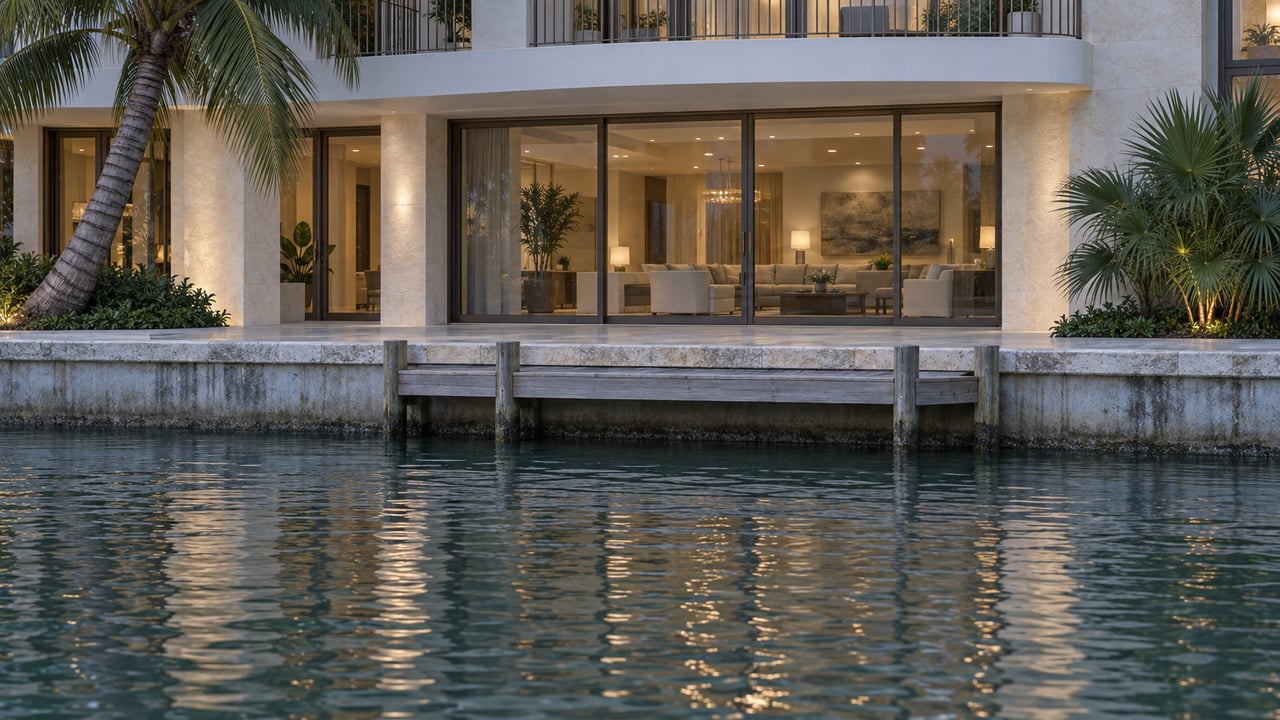
The City regulates private docks and shoreline use. Sellers should assemble dock and lift permits, seawall records, and maintenance documentation to reduce friction (Fort Lauderdale docks code).
Architectural scale and style
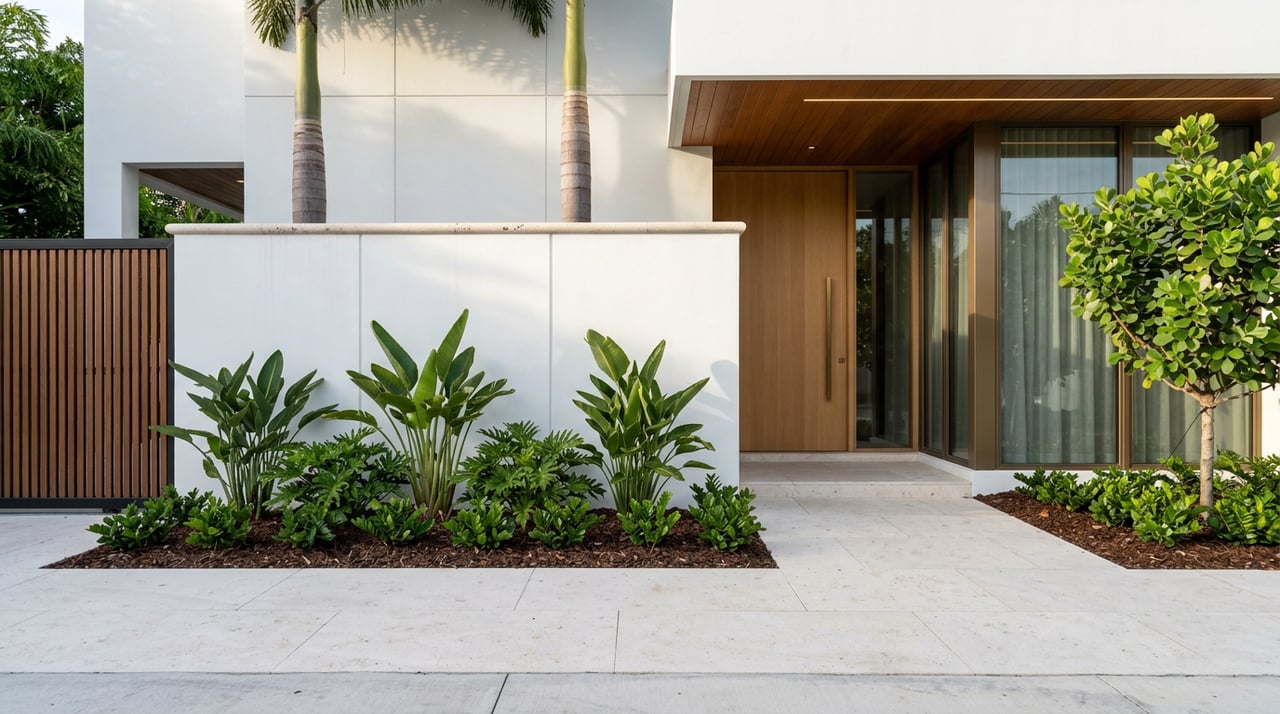
Buyers tend to prefer contemporary coastal architecture with clean lines, large expanses of glass, and open plans. Multi‑level layouts with generous primary suites, guest or entertaining wings, and elevator access are common asks. Climate‑controlled garages for three to four cars and flexible guest or staff quarters are frequent requirements.
Indoor‑outdoor living
Seamless transitions are essential. Expect interest in pocketing glass walls, covered loggias, multi‑zone terraces, and resort‑style pools. Rooftop terraces or observation decks that frame water and skyline views can tip decisions in favor of newer builds (luxury amenity trends).
Interior finishes and systems
Chef‑grade kitchens with premium built‑ins, custom cabinetry, and large islands are baseline expectations. Buyers also look for whole‑home automation, robust A/V, zoned climate control, and spa‑level baths. Wine rooms and screening rooms remain popular. Many clients prioritize lock‑and‑leave readiness with secure storage and minimal maintenance requirements (NAR luxury insights).
Privacy and security
Gated approaches, landscape screening, and comprehensive camera and monitoring systems are valued. Discreet security that protects without drawing attention is often preferred. Established relationships with trusted local service providers also add peace of mind.
Climate resilience and insurance sensitivity
Impact‑rated openings, elevated finished floors, reinforced construction, and standby generators are increasingly standard at this level. These features matter to buyers, lenders, and insurers alike. Regional sea‑level planning informs expectations; serious buyers and sellers should understand Base Flood Elevation, elevation certificates, and local seawall standards (Southeast Florida sea‑level guidance).
Pricing signals you can trust
Across recent listings and notable sales, premiums tend to concentrate in three areas:
- Wide‑canal lots with verified deep water and a short route to the inlet.
- New construction or fully modernized estates with contemporary design and high‑end systems.
- Parcels offering 75 to 120 plus feet of usable dockage with turnkey utilities.
Ultra‑luxury buyers strongly prefer move‑in quality. Properties that require major upgrades can still trade well if the lot geometry and water attributes are exceptional, but they are usually priced accordingly.
Buyer due diligence that protects your purchase
Before you fall in love with a view, verify the fundamentals. Start with these steps:
- Flood and elevation. Confirm the FEMA flood zone, check for an Elevation Certificate, and understand the BFE used for any recent permits. The City’s floodplain resources explain what to look for (Fort Lauderdale floodplain guidance).
- Marine survey. Hire a licensed marine surveyor to document MLW depth at the dock and along the route, turning radii, and any obstructions. Confirm dock power, water, and lift capacity. For local context and waterway resources, consult the regional marine association (MIASF).
- Dock and seawall records. Verify permit history, including any seawall replacement, tie‑backs, and lift installations. Private use of shoreline follows City rules, so clarity here reduces risk (City code for boats and docks).
- Route to the inlet. Validate fixed bridge clearances, likely travel time, and seasonal depth variations against charts. Listings that say “no fixed bridges” should always be verified in person and on paper.
- Systems and insurance. Review HVAC age and condition, electrical service, surge protection, generator, and impact glass. Ask your insurance advisor for a written estimate early using the property’s elevation and resilience details (City flood and insurance overview).
Seller preparation that maximizes response
If you are preparing to list, proactive documentation and targeted upgrades lead to cleaner offers and fewer delays:
- Surface your permits. Compile the chain of dock, boat‑lift, and seawall permits along with recent inspection or repair invoices (City docks and seawalls code).
- Elevation and seawall. Provide the Elevation Certificate if available and confirm your seawall elevation meets current standards or document upgrades (seawall standards overview).
- Resilience features. Highlight impact glass, new or reinforced roofing systems, elevated utilities, and a tested generator. These items can improve buyer confidence and insurability.
- Turnkey appeal. Modernize key systems and finishes, present a clean smart‑home setup, and ensure outdoor entertaining spaces feel cohesive and ready for use.
- Waterway documentation. Offer a recent marine survey or a depth and clearance summary for your dock approach, including any known restrictions.
Why the marine economy matters here
Fort Lauderdale’s status as a yachting capital is not just a lifestyle point. The marine industry and the international boat show bring sustained attention to homes with serious docking capability. That attention supports long‑term demand for deep‑water, ocean‑access properties and helps explain why buyers scrutinize water depth, dock infrastructure, and route geometry so closely (FLIBS economic impact context).
Move forward with confidence
Whether you are shortlisting properties or positioning your home for market, clarity on yacht readiness, modern design, and resilience will help you make smart decisions. If you want a confidential strategy tailored to your goals, connect with Roman Tschannen for a private consultation.
FAQs
What makes a Las Olas Isles home truly yacht‑ready?
- Verified dock length and MLW depth, clear turning basins, and a route to the inlet without limiting fixed bridges, plus dockside power and water supported by proper permits.
How do I confirm a listing’s “no fixed bridges” claim?
- Cross‑check charts and conduct a marine survey to verify bridge clearances and depths along the exact route, then confirm on site before you finalize terms.
Which resilience features matter most to insurers and lenders?
- Impact‑rated glass and doors, elevated finished floors, reinforced construction, elevated utilities, modern drainage, and a standby generator can all improve insurability.
What flood and elevation documents should I request as a buyer?
- Ask for the Elevation Certificate, recent permits that reference the BFE, and any seawall records; the City’s floodplain guidance explains how these affect risk and requirements.
As a seller, which documents should I gather before listing?
- Compile dock, boat‑lift, and seawall permits, recent inspection or repair invoices, the Elevation Certificate, and any marine survey or depth report for the dock approach.