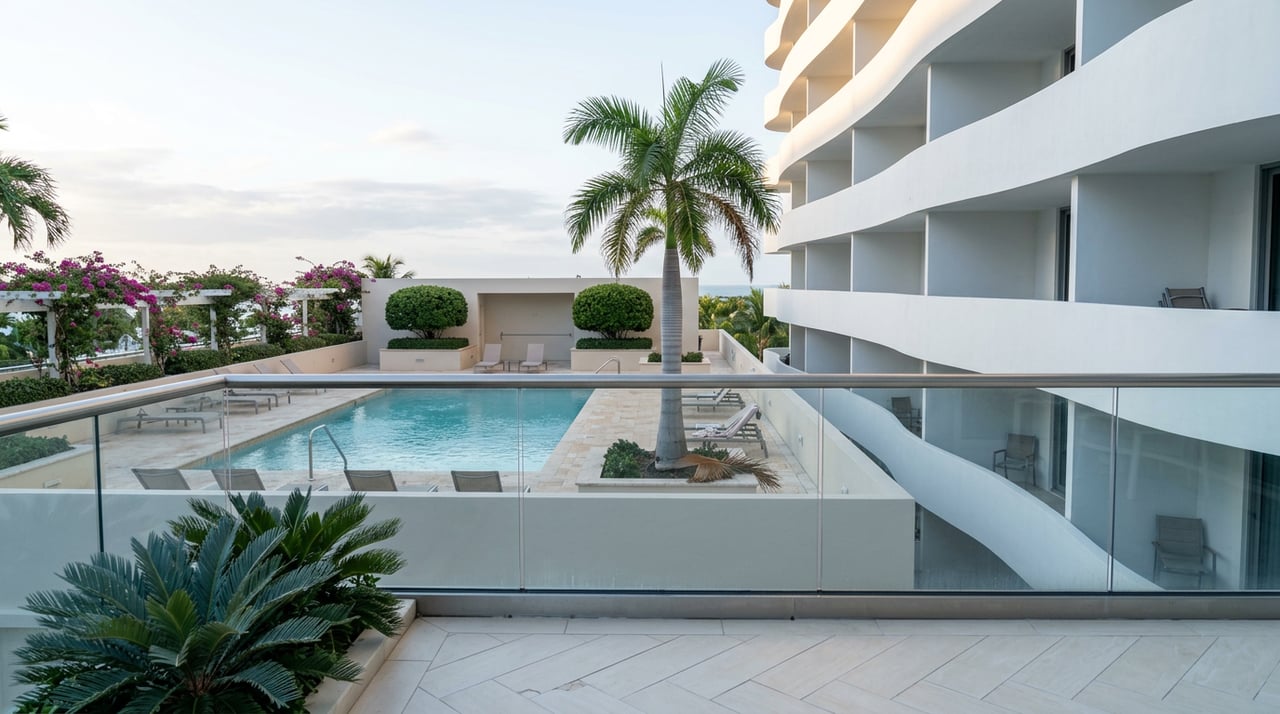
A buyer puts 40 percent down on a one-bedroom in one of the older towers on Galt Ocean Mile. Credit score north of 780. Full pre-approval letter in hand. Two weeks before closing, the lender comes back with a different answer than expected: the loan cannot be sold to Fannie Mae, because the building's master insurance policy carries a wind deductible above the new federal cap. The buyer's file was never the problem. The building's file was.
That scenario was rare eighteen months ago. As of this fall it is becoming routine along Fort Lauderdale's beach corridor, and the reason has nothing to do with how much cash a buyer brings to the table. Between March and August of this year, Fannie Mae and Freddie Mac rewrote the rules for how a condo building itself qualifies for conventional financing, and the rewrite lands hardest on exactly the kind of building that defines this stretch of coastline: a mid-century high-rise that has never had to prove its finances this closely before.
The Loophole That Closed on August 3
For years, a buyer with a large down payment or strong credit could often sidestep a deep look at the condo association behind the unit. Fannie Mae's Limited Review and Freddie Mac's Streamlined Review let lenders approve loans on established buildings without the full battery of checks on reserves, insurance, and litigation history, as long as the loan-to-value ratio was low enough or the borrower's profile was strong enough. That workaround is gone. Fannie Mae's Lender Letter LL-2026-03 retired the Limited Review pathway for loan applications dated on or after August 3, 2026, and Freddie Mac eliminated the equivalent Streamlined Review the same day. Any established condominium project with more than ten units now goes through Full Review no matter the size of the down payment or the strength of the borrower's credit.
That is the mechanism worth sitting with. A buyer's financial strength used to be able to compensate for a building's thin paperwork. It cannot anymore. The building's reserves, its insurance declarations page, its delinquency rate, and its inspection history are now evaluated on their own terms before the borrower's file even gets a full look.
Three Dates, Already Behind Us
The August 3 change did not arrive on its own. It was the third of three coordinated moves this year, and all three have already taken effect.
| Date | What changed | What it means for a buyer |
|---|---|---|
| March 18, 2026 | Fannie Mae and Freddie Mac dropped the 50 percent investor concentration cap for established buildings under Full Review, retired Florida's separate PERS review requirement for new attached condo projects, and expanded the small-project waiver to buildings of 10 units or fewer | Rental-heavy older buildings became easier to finance, but new Florida developments now go through the same lender-delegated process as everywhere else, with no lighter-touch state exception |
| July 1, 2026 | A hard $50,000 cap took effect on the per-unit deductible a condo master property policy can carry for any required peril, replacing the older rule that allowed deductibles up to 5 percent of the policy's face value | If a building's wind or flood deductible sits above $50,000 on its current declarations page, the building is treated as non-warrantable for a conventional loan until the policy changes |
| August 3, 2026 | Limited Review and Streamlined Review were fully retired for buildings over 10 units | A large down payment or excellent credit no longer buys a buyer around a building-level review |
Read as a sequence, the pattern is clear. Each date narrowed the same gap: the space where a strong buyer could still close on a weak building. That gap is now closed for anything larger than a ten-unit project.
Why the Corridor Feels This First
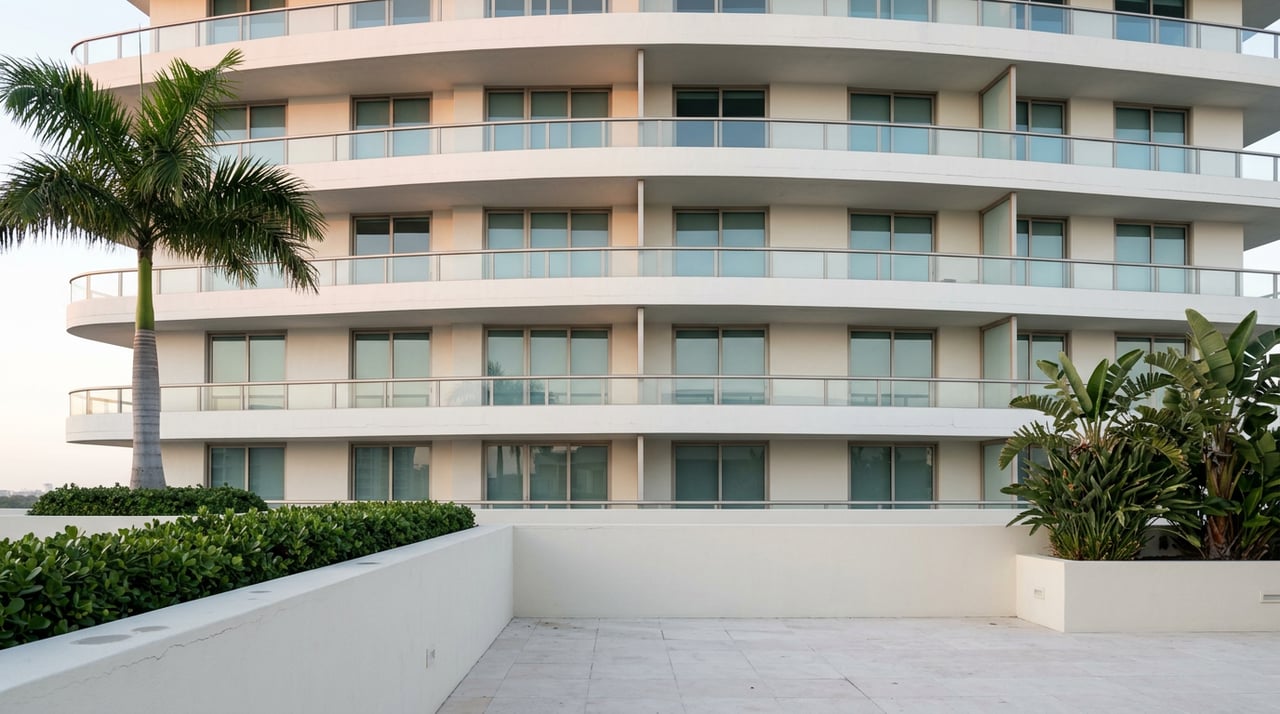
Fort Lauderdale Beach's condo stock is older than most of what gets built today, and that is precisely why this shift matters here more than in newer submarkets. Twenty-one high-rise towers now line Galt Ocean Mile, the stretch of A1A running north from the central beach, most of them raised through the 1960s and 1970s as Coral Ridge Properties developed the old Galt family land parcel by parcel. Galt Towers Condominium went up in 1967. Coral Ridge Towers East, a 17-story building in the neighboring Bermuda Riviera area, dates to 1963. Buildings from that era were not built with a 2026 insurance market or a post-Surfside inspection regime in mind, and under Florida Statute 553.899, any condominium three stories or taller within three miles of the coastline can be required to complete its first structural milestone inspection at 25 years of age rather than 30, with a follow-up every ten years after that.
A Fort Lauderdale association law firm put the geography plainly: the 25-year coastal trigger captures almost the entire A1A corridor, Galt Ocean Mile, Harbor Beach, and Lauderdale-by-the-Sea, and most of the buildings caught by it went up between 1965 and 1995. On a corridor where the median tower is already older than the trigger itself, an incomplete or unaddressed milestone inspection is not a hypothetical risk. It is the most common reason a Florida condo building loses its conventional financing eligibility in the first place.
Fannie Mae's own data backs that up. As of August 2025, only 3.6 percent of the condo projects it reviews carried an ineligible status, but the two leading reasons were insufficient master property insurance and critical repair issues tied to failed state or local inspection requirements. Those are the same two levers this year's rule changes tightened.
The exposure is not abstract for this stretch of coastline. Fort Lauderdale has already produced a named example on the industry's radar. Bisnow's reporting on the condo financing blacklist specifically cited Galt Mile in Fort Lauderdale as an area with buildings that had already appeared on Fannie Mae's non-warrantable registry. More recent tallies put the scale in context: a dataset the Boston law firm Allcock Marcus obtained and shared publicly in March 2025 counted 1,438 Florida condominiums or HOAs on that list, roughly 28 percent of the national total, with about 696 of those concentrated in the Miami-Dade, Broward, and Palm Beach tri-county area. That South Florida count had more than doubled over the prior two years.
What Actually Gets Checked in a Full Review
Once a building is subject to Full Review, six criteria decide whether it stays warrantable:
- Reserve funding at or above 10 percent of annual assessment income today, rising to 15 percent for loan applications dated on or after January 4, 2027
- No more than 15 percent of units 60 or more days delinquent on assessments
- No single entity owning more than 20 percent of units in a building of 21 units or more
- For new projects, at least 50 percent of units presold
- Master property insurance at full replacement cost with a per-unit deductible capped at $50,000 for any required peril
- Commercial space limited to no more than 35 percent of the project
Fail any one of these and the building drops to non-warrantable status, regardless of who is trying to buy inside it.
Documents to Pull Before You Waive the Financing Contingency
For a buyer already under contract or about to write an offer on Fort Lauderdale Beach, the practical response is to request the paperwork early rather than let a lender surface it after the inspection period closes.
- The HOA condo questionnaire, which summarizes reserves, delinquencies, insurance, and any pending litigation in one document
- The master policy declarations page, checked specifically for the per-unit deductible on wind and water perils against the $50,000 cap
- The most recent reserve study or Structural Integrity Reserve Study, along with confirmation of when it was last updated
- Board meeting minutes from the last twelve months, which often flag a special assessment or litigation matter before it reaches the questionnaire
- The building's milestone inspection status, including whether it has completed Phase 1, whether Phase 2 was required, and whether any required repairs have started within the statutory window
A buyer who reads these before removing a financing contingency is trading a few days of diligence for the ability to walk away cleanly if the building's numbers do not hold up.
If the Building Fails the Test, the Options Cost More
Non-warrantable does not mean unfinanceable. It means the loan moves into Non-QM, portfolio, DSCR, or Foreign National programs, typically with 25 to 35 percent down and pricing above conventional rates. For a domestic buyer counting on a standard 20 percent down conventional loan, that is a real change in the math on the same unit. For an international buyer who was already planning to finance through a portfolio or Foreign National channel, the shift changes less, since those programs were built to work with non-warrantable buildings from the start. That asymmetry is worth knowing before you fall in love with a specific tower on the Mile.
A Few Questions Worth Settling Early
Does any of this matter for a cash purchase? It still matters for resale. A cash buyer is not blocked by a building's warrantability status today, but the next buyer down the line may need conventional financing, and a non-warrantable building narrows that buyer pool and can weigh on resale pricing.
What about a cooperative building rather than a condominium, like the older co-ops on the Mile? Cooperatives are underwritten on a separate track from condominiums, but Florida's milestone inspection statute applies to both condo and cooperative buildings three stories or taller, so the structural inspection timeline is the same even when the financing rules differ.
Can a building's status be checked before an offer is written? Associations, property managers, and authorized advisors can look up a project through Fannie Mae's Condo Status Finder, though a clean result there confirms only that no known issue has been flagged, not that the project has been fully reviewed and approved.
None of this changes what makes a Fort Lauderdale Beach address worth wanting. It changes which building on that address is the right one to write an offer on this year. If you are weighing a purchase along the beach corridor and want the building's paperwork read before you get attached to the unit, Roman Tschannen can help. Request a private consultation and get a clear read on where a specific building stands before your financing contingency clock starts running.